¿Qué estás buscando?

When buying nurse uniforms, sizing is always an unavoidable hurdle. Whether schools order uniformly or hospitals distribute in bulk, once the size is reported incorrectly, exchanges are troublesome and the fit is uncomfortable – and many people end up wearing it for a whole year.
"Buy one size up" is the most widely circulated piece of advice, but it's only half right. The ease allowance for nurse uniforms isn't a vague concept of "one size up"—whether the fabric has stretch, whether the body type is heavier or slimmer, and whether the nurse works day shifts or rotating night shifts all correspond to completely different ease logic. Today we're going to break this down—from sizing basis, fabric stretch, and body type differences to shift characteristics—and explain it all at once.
1. First, understand: what is nurse uniform sizing based on?
Nurse uniform sizes aren't arbitrarily set by manufacturers. The sizing of medical staff occupational clothing is based on the national clothing sizing standards GB/T 1335.1 (men) and GB/T 1335.2 (women).
The core of the national sizing system has two dimensions: "number" refers to height, determining garment length, sleeve length, and trouser length; "type" refers to net chest circumference or net waist circumference, determining how loose or fitted the garment is. Body type is divided into Y, A, B, and C categories based on the difference between chest and waist.
So size charts usually have three reference columns: height, weight, and chest circumference. But there's a common misconception here: weight is only an indirect reference—what really determines fit is net chest circumference, net waist circumference, and net hip circumference. Two people of the same height but with a 5 kg weight difference can look completely different in the same size.
2. Can height and weight be directly converted into size? No precise formula, but there are patterns
The "recommended height" and "recommended weight" on size charts are empirical ranges summarised by manufacturers based on large amounts of data. For example, common reference ranges: size S corresponds to 155–160 cm and 45–55 kg, M to 160–165 cm and 55–60 kg, L to 165–170 cm and 60–65 kg, and so on. Different brands may vary by 1–3 cm; you can't just plug numbers into a formula.
When height and weight fall into different size ranges, prioritise weight (more accurately, girth measurements). A person 165 cm tall but weighing 70 kg – if you choose M by height, the chest, waist, and hips will likely all be tight, and movement will be severely restricted; choosing L or XL by weight, the top may be slightly long, but at least the joints aren't restricted. Conversely, a slim person 170 cm tall but only 50 kg—forcing size S by weight means the garment length and sleeve length will clearly be insufficient, exposing the waist when raising arms and leaving cuffs hanging at the forearm – equally unacceptable.
A practical order of judgment: first measure net chest circumference and net hip circumference, use these two data points to match the chest/hip columns on the size chart, and use height to double-check whether garment length and sleeve length fall within an acceptable range. If you can only report height and weight, tell the supplier "girth measurements take priority," not "height takes priority."
3. The core of ease isn't "one size up" – it's "fabric stretch determines how much room to leave"
Ease in nurse uniforms refers to the difference between the garment's flat measurements and the body's net measurements. Whether this difference is sufficient directly determines whether the fabric moves with you when you raise your arms, bend over, or squat – or locks you in place.
Whether the fabric has stretch completely changes the ease rules:
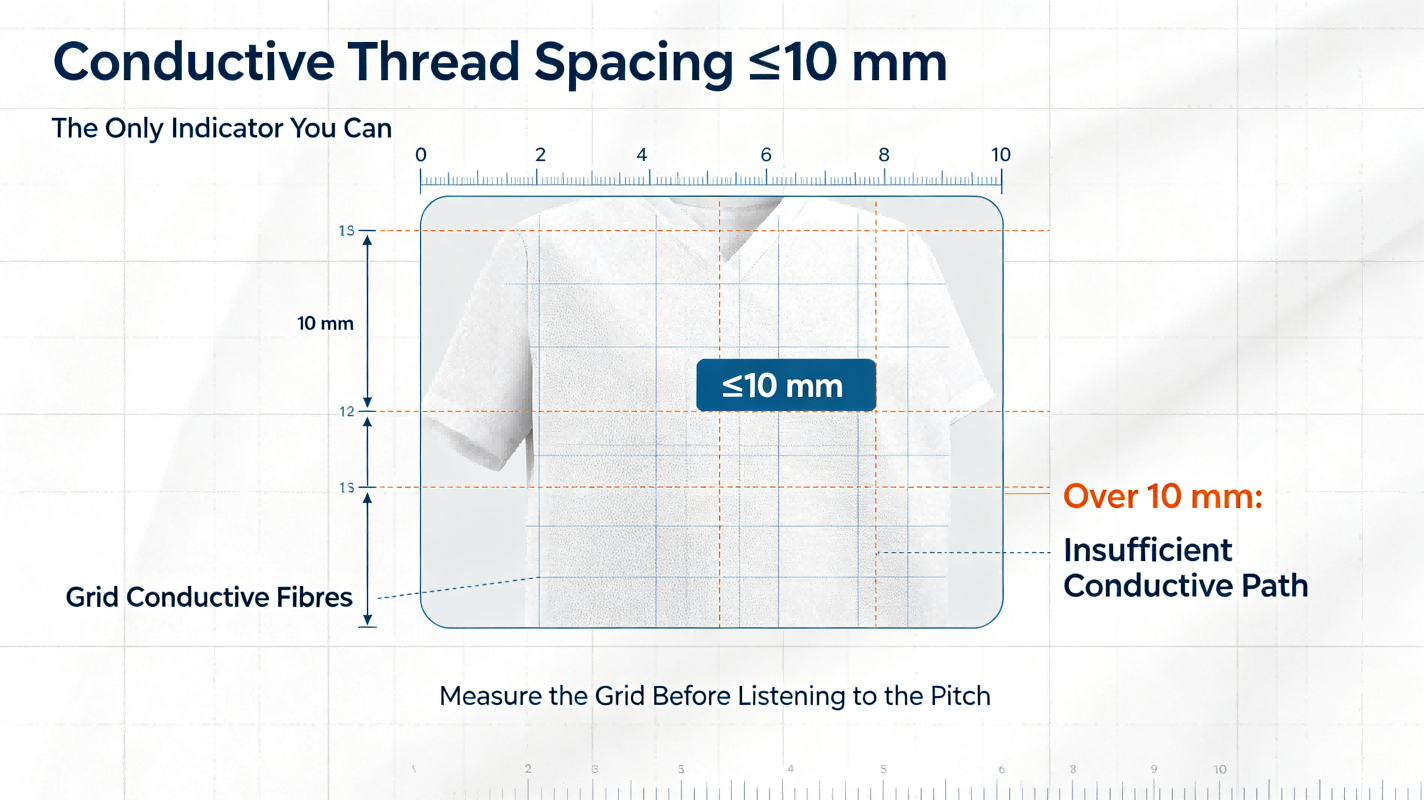
Stretch fabric containing spandex (usually spandex content ≥5%) has lateral elastic recovery. The flat chest circumference only needs to be 4–6 cm larger than the net chest circumference to meet basic movement needs. Stretch fabric can be chosen in a relatively fitted size – you don't need to "buy big" to gain movement room.
Non-stretch or low-stretch woven fabric (pure cotton, ordinary poly-cotton, plain/twill without spandex) has no mechanical recovery of its own – the fabric cannot extend itself when bending or raising arms. For this type of nurse uniform, the flat chest circumference needs to be 8–10 cm larger than the net chest circumference, so that squatting, bending, and arm-raising don't place excessive tension on joints and seams
Much of the "buy one size up" advice is essentially compensating for that 8–10 cm of physical looseness in non-stretch fabric. But if the fabric itself has stretch, blindly sizing up again will make it baggy, shift the armholes, and cause fabric to bunch up during movement – neither neat nor safe.
4. Different body types require different sizing logic
Average build: Choose the size corresponding to net chest circumference, then use height to double-check garment length and sleeve length. If you fall between two sizes, stretch fabric can go smaller for a closer fit; non-stretch fabric should go larger for movement room.
Slim build: A common mistake is "choosing too small by weight, resulting in insufficient garment and sleeve length." Slim people have smaller girths but may be of normal or even above-average height. Use chest circumference to determine fit, height to determine length. If necessary, top and trousers can be sized separately – top by chest circumference, trousers by waist and hip circumference.
Heavier build or larger hips: This is the most common situation of "top long enough, trousers too tight." When choosing a size, use the largest girth (usually hip or chest) as the benchmark. If the hip corresponds to L and the chest to M, choose L. A slightly loose top can be flattered by the cut, but trousers that bind at the hip joint will directly affect stability and flexibility when squatting and walking. For pear-shaped figures, prioritise trouser styles with side slits or back pleats to release hip pressure.
Prominent shoulder width: Shoulder width is a dimension easily overlooked in size charts. If shoulders are narrow and you size up, the armholes slip down; if shoulders are broad and you size down, the shoulder seams bind and arm-raising is restricted. Asian cuts usually have shallower and wider armholes, offering more tolerance for broad shoulders; European cuts have deeper and narrower armholes – closer fitting but with less room for raising arms. If shoulder width is clearly larger than the corresponding size data, it's better to go up one size, or choose a raglan sleeve style – raglan sleeves have no shoulder seam, and restriction of shoulder joint elevation and abduction is noticeably lower.
5. Different shifts and departments have different ease demands
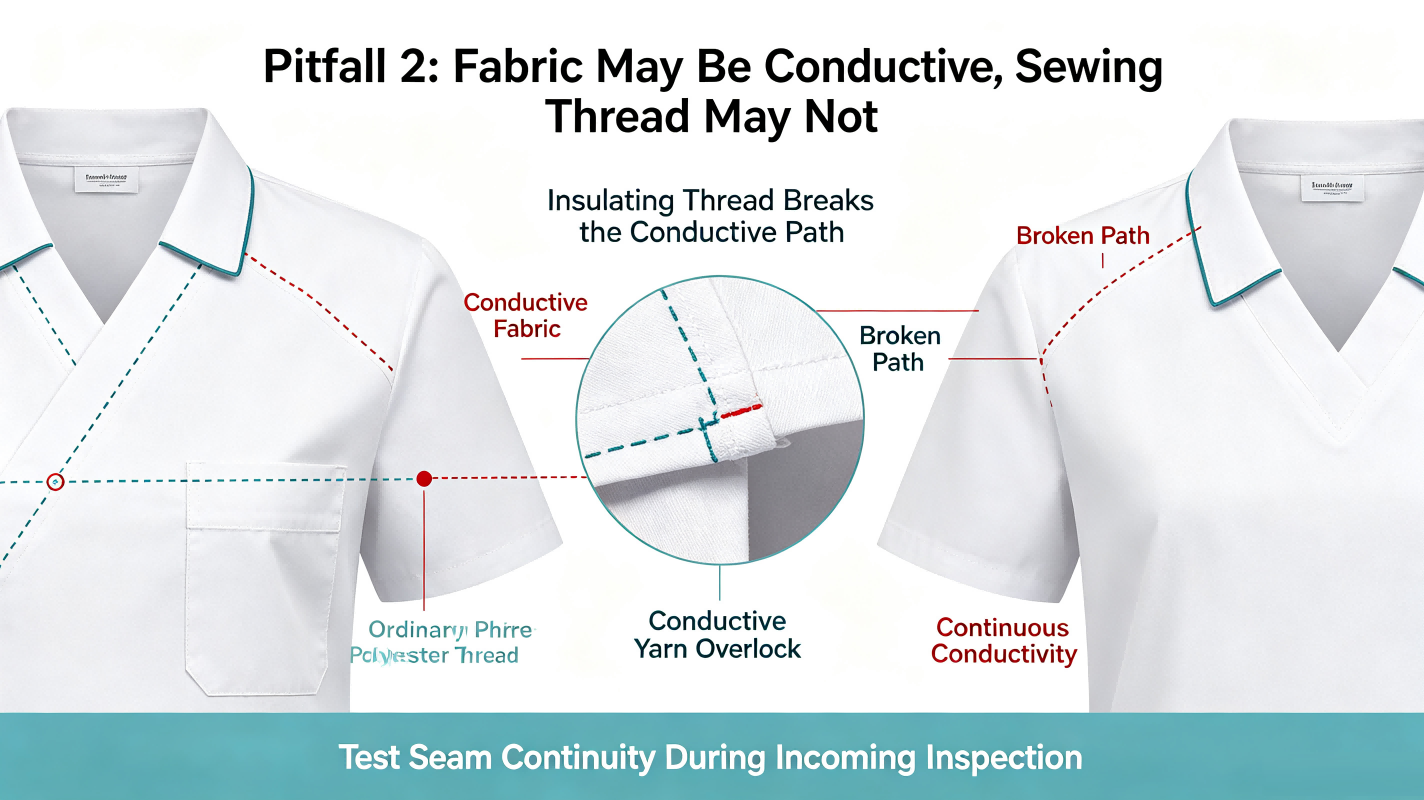
Day shifts (outpatient, general ward shifts): Mainly standing, walking, and routine procedures – ease only needs to meet basic arm-raising and bending. Stretch fabric: 4–6 cm; non-stretch fabric: 8–10 cm. For long standing in outpatient settings, you can pay attention to waist support, but there's no need to deliberately size up for "more movement."
Night shifts/rotating shifts (emergency, ICU, night wards): Fast pace, large range of motion—quick turns, squatting to pick things up, assisting patient transfers, even CPR. These scenarios demand more ease, but the solution isn't unlimited sizing up—it's fabric stretch + cut. Prioritise spandex-containing stretch fabric, and look for raglan sleeves or styles with sufficient armhole depth to ensure the shoulders and back don't bind and cuffs don't catch when reaching forward and raising arms. On that basis, if you still fall between two sizes, choose the larger rather than the smaller.
Operating rooms/scrub suits: Scrub suits usually require a looser fit for quick donning and doffing and dimensional stability after high-temperature washing. You can go one size larger than everyday nurse uniforms, but the core is still confirming whether shrinkage after washing has been factored in.
6. Don't forget shrinkage: the "post-wash size" of pure cotton nurse uniforms is the real size
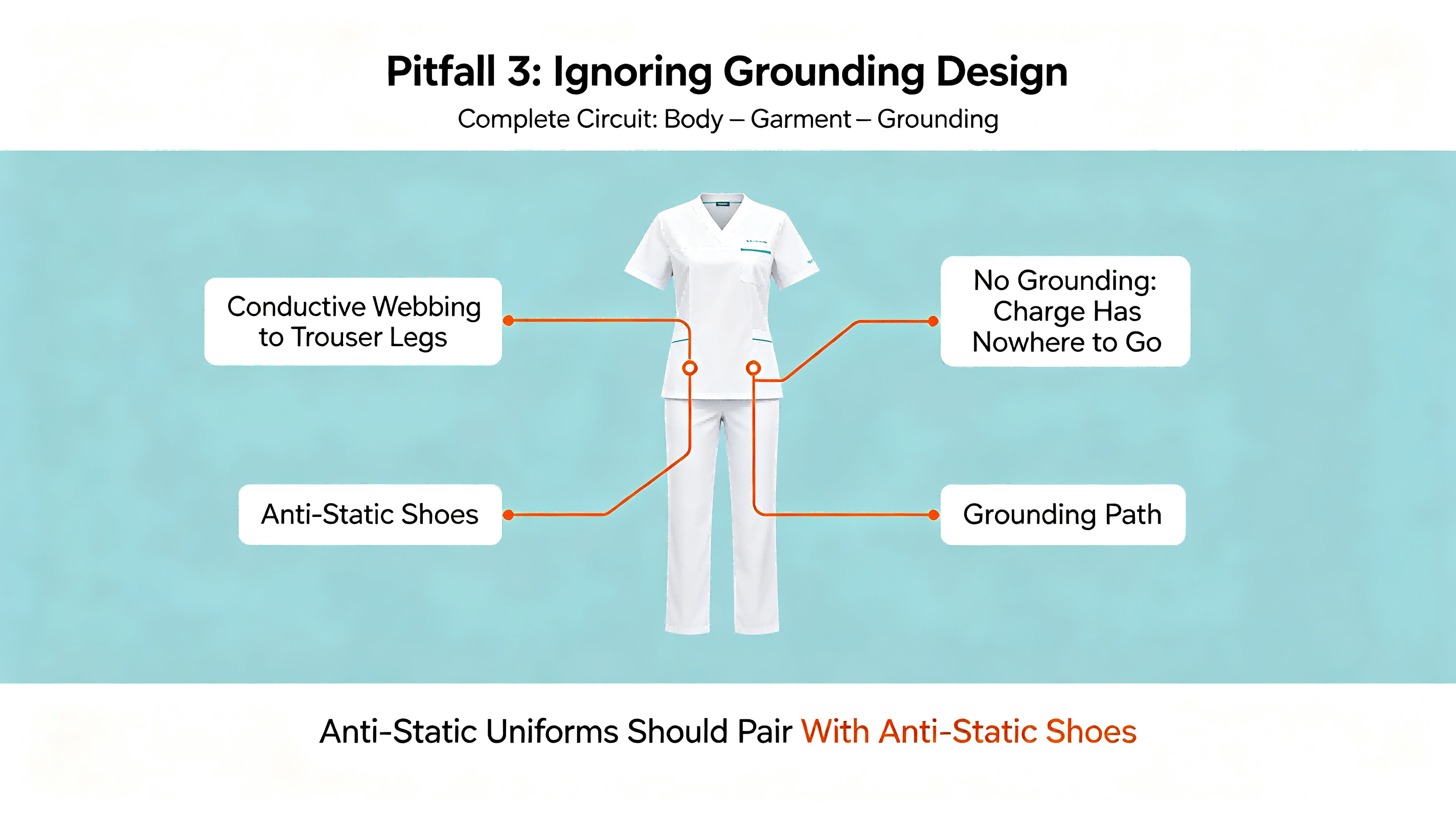
Nurse uniforms undergo repeated high-temperature washing and disinfection, so shrinkage is a variable that must be factored in. Pure cotton fabric typically shrinks 4%–6%; poly-cotton blends shrink relatively less, but cumulative dimensional change can still occur after multiple high-temperature washes.
Actual wearing feedback shows that pure cotton nurse uniforms can go from "XL shrinking to L, L shrinking to M" after washing. This means if you choose a pure cotton nurse uniform based on pre-wash fit, it may become tight after a few washes. For pure cotton or high-cotton-content nurse uniforms, in addition to ease of movement, you need to reserve extra space for shrinkage—either go half a size to one size larger, or confirm during procurement whether the fabric has been pre-shrunk and what the dimensional change rate after washing is.
Stretch fabric and pre-shrunk poly-cotton blends have less shrinkage pressure, so you can choose sizes based on normal movement ease.
7. A summary table: what size to choose in which situation
|
Situation |
Sizing logic |
Ease key points |
|
Stretch fabric (with spandex) |
Match girth, can be fitted |
Flat chest circumference 4–6 cm larger than net chest |
|
Non-stretch/low-stretch woven fabric |
Match girth, better larger than smaller |
Flat chest circumference 8–10 cm larger than net chest |
|
Average build |
Chest determines size, height double-checks length |
Between two sizes, decide by fabric stretch |
|
Slim build |
Chest determines fit, height determines length |
Tops and trousers can be sized separately |
|
Heavier build/large hips |
Base on largest girth (chest or hip) |
Trousers must not bind hips; prioritise freedom of movement |
|
Prominent shoulder width |
Check shoulder width data or choose raglan sleeves |
Shoulder seams must not bind; armholes must not slip |
|
Day/regular shifts |
Standard ease |
Stretch 4–6 cm, non-stretch 8–10 cm |
|
Night/emergency/ICU |
Stretch + cut priority |
Raglan sleeves or sufficiently deep armholes; between two sizes choose larger |
|
Pure cotton/high cotton content |
Factor in shrinkage rate |
Post-wash size is the real size |
A final honest word
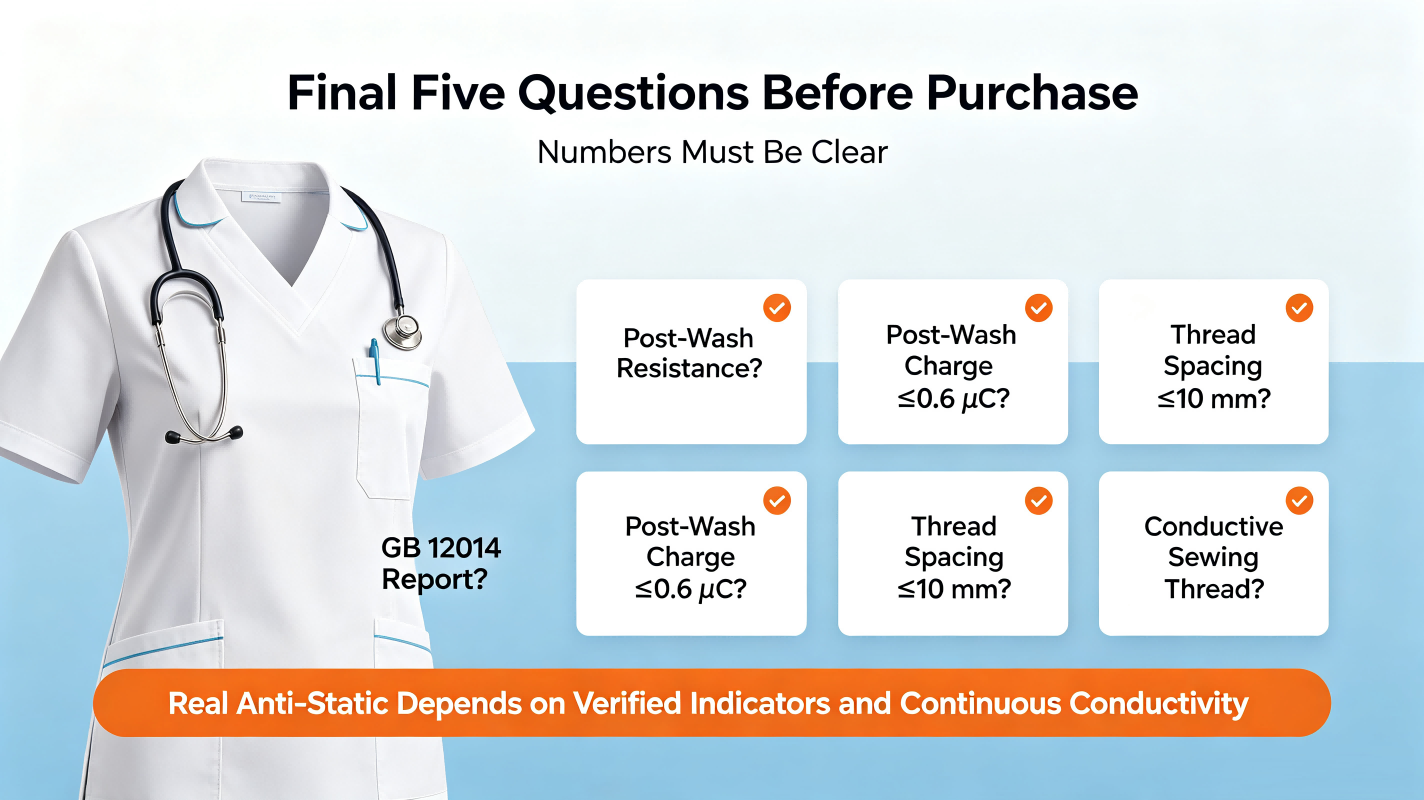
When choosing nurse uniform sizes, don't blindly believe in "buy one size up," and don't look only at height and weight. Girth determines fit, height determines length, fabric determines ease, and shift determines movement needs.
If you can provide net chest and net hip measurements, use girth to match the size chart; if you can only report height and weight, ask clearly whether the fabric has stretch and what the shrinkage rate is. Non-stretch fabric needs 8–10 cm of room; stretch fabric needs only 4–6 cm; pure cotton versions must factor in shrinkage; for night shifts and emergency, pay extra attention to stretch and cut.
A well-fitting nurse uniform isn't "looks like it fits" – it's no binding at the shoulders when raising arms, no tightness in the back when bending, no restriction at the hips when squatting, and still wearable after several washes. Choose by this standard, and it's more reliable than any "one size up" advice.